
Taste of Heaven – Nasi Goreng is Indonesia’s culinary heartbeat—a dish so deeply woven into national identity that it appears on breakfast tables, street carts, and presidential menus alike. This isn’t just fried rice; it’s a symphony of wok hei, sweet soy, and complex spice paste that transforms humble leftovers into something transcendent. Each grain tells a story of resourcefulness, flavor mastery, and daily comfort.
🏝️ A Nation’s Canvas, A Thousand Variations
Born from the ingenious use of leftover rice, nasi goreng has roots in Chinese fried rice but evolved into something uniquely Indonesian through the addition of native ingredients: sweet soy sauce (kecap manis), shrimp paste (terasi), and a generous hand with shallots and chilies. Every region, every family, every street vendor has their “secret” version—this is Indonesia’s edible democracy.
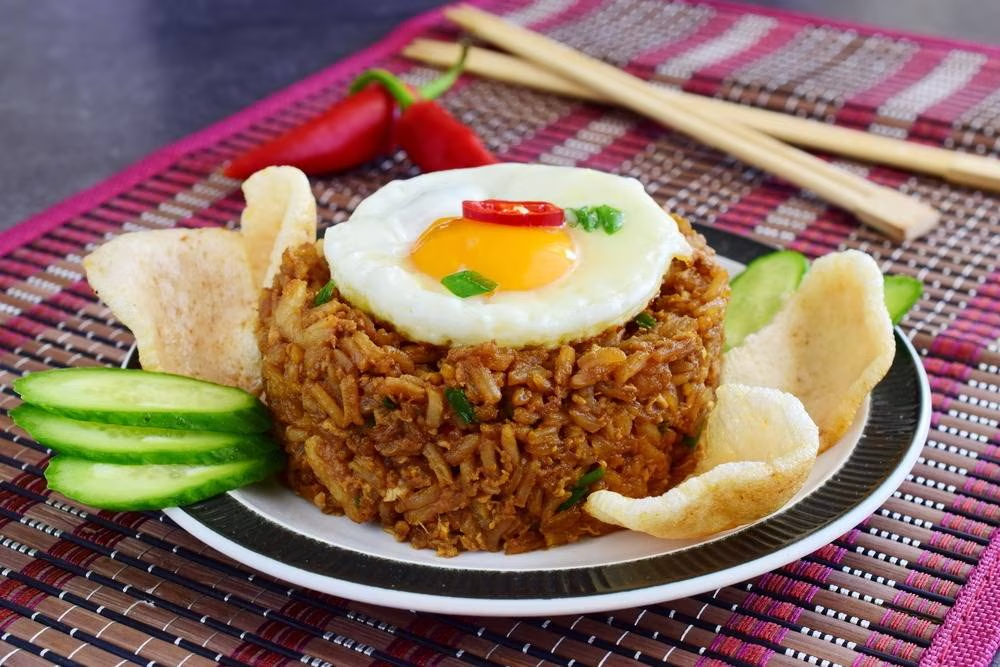
🛒 Ingredients: The Sacred Pantheon
The Foundation:
- 600 g cold cooked jasmine rice (day-old, refrigerated)
- Critical: Fresh rice = mushy disaster
- Preparation: Cook rice with slightly less water, spread on tray to dry
- Storage: Refrigerate uncovered 6+ hours
The Spice Paste (Bumbu – The Soul):
- 6–8 shallots (Indonesian red shallots preferred)
- 5–6 garlic cloves
- 4–10 red bird’s eye chilies (cabe rawit)
- Adjustment: 4=mild, 6=medium, 8=hot, 10=Indonesian street level
- 2 red chilies (cabe merah besar) for color and milder heat
- 1 tsp toasted shrimp paste (terasi/balacan)
- Toasting method: Wrap in foil, dry roast 2 minutes each side
- Optional but traditional: 1 candlenut (kemiri) for richness
- Optional: 1 tsp coriander seeds, toasted
The Protein:
- 200 g chicken thigh, diced (not breast—thigh stays juicy)
- Alternative proteins: Shrimp, beef, squid, tofu, tempeh
- Or combination: 100g chicken + 100g shrimp
The Sauce Trinity:
- 3 tbsp kecap manis (ABC brand preferred)
- Non-negotiable: This is the signature flavor and color
- 1 tbsp regular soy sauce (kecap asin)
- 1–2 tbsp oyster sauce (optional but common in restaurant versions)
- 1 tsp salt (adjust after tasting)
The Aromatics & Vegetables:
- 4 tbsp vegetable oil (peanut or palm oil traditional)
- 2 spring onions, chopped (white and green parts separated)
- 1 carrot, small dice (optional)
- 100 g cabbage, thinly sliced (optional)
- Handful of green beans, sliced (optional)
The Egg (The Crown):
- 4 eggs, fried sunny-side up with crispy edges
- Traditional method: Cook in same wok before rice, set aside
The Garnish Orchestra:
- Crispy fried shallots (bawang goreng)
- Sliced cucumber and tomato
- Prawn crackers (krupuk udang)
- Additional spring onion greens
- Lime wedge
- Sambal on side (for extra heat)
🔥 The Wok Ritual: Step-by-Step Mastery
DAY BEFORE (The Foundation):
1. Rice Preparation:
- Cook jasmine rice with 10% less water than usual.
- Fluff immediately, spread on baking sheet.
- Cool completely, refrigerate uncovered overnight.
- Result: Dry, separate grains that won’t clump.
COOKING DAY (The 10-Minute Ballet):
2. The Mise en Place (Non-Negotiable):
- Everything measured, chopped, within reach
- Wok cooking waits for no one
3. The Paste Perfection:
- Toast shrimp paste until fragrant.
- Blend all paste ingredients with minimal water to thick paste.
- Texture: Should be smooth, no gritty bits
- Traditional: Stone mortar and pestle (ulekan) for superior texture
4. The Wok Symphony:
Step 1: Season the Wok (If Carbon Steel):
- Heat wok until smoking.
- Add 1 tbsp oil, swirl to coat.
- Discard oil (this creates non-stick surface).
Step 2: The Egg (Optional Early Method):
- Heat 1 tbsp oil, fry eggs until edges crispy.
- Remove, set aside.
Step 3: The Paste Awakening:
- High heat, add remaining oil.
- Fry paste 5–7 minutes until:
- Color: Deepens to brick red
- Aroma: Intense, no raw garlic/shallot smell
- Oil separates and pools at edges
- Critical: Undercooked paste = harsh, raw flavor
Step 4: Protein Introduction:
- Add chicken (or protein), stir-fry 2–3 minutes until cooked.
- If using shrimp: Add later (cooks in 1 minute).
Step 5: The Rice Revolution:
- Add cold rice, breaking up any clumps.
- Stir-fry 3–4 minutes until:
- Every grain coated with paste
- Rice heats through
- Some grains get slight char (wok hei)
- Technique: Press-and-scoop motion with wok spatula
Step 6: The Sauce Embrace:
- Drizzle kecap manis around edges (caramelizes on hot wok).
- Add soy sauce, salt.
- Toss vigorously 1–2 minutes until:
- Even dark caramel color
- Slight stickiness develops
- Taste: Balance sweet, salty, spicy
Step 7: The Green Finish:
- Add spring onion whites, any vegetables.
- Toss 30 seconds (vegetables should stay crisp).
- Turn off heat, add spring onion greens.
5. The Grand Assembly:
- Portion rice into bowls or plates
- Top with fried egg (yolk runny if possible)
- Garnish artistically:
- Crispy shallots scattered
- Cucumber and tomato slices
- Prawn crackers standing up
- Lime wedge on side
- Sambal in small dish alongside
🍽️ The Indonesian Way of Eating
Street Food Style (Warung):
- Served on banana leaf or wax paper
- Eaten with spoon only (no fork)
- Mix egg yolk into rice before eating
- Squeeze lime over everything
- Add sambal to taste
Home Style:
- Family-style platter with separate garnish bowls
- Multiple protein options (chicken, shrimp, beef)
- Extra krupuk in basket
- Sweet iced tea (teh manis) alongside
🎯 The Hallmarks of Perfect Nasi Goreng
Visual Perfection:
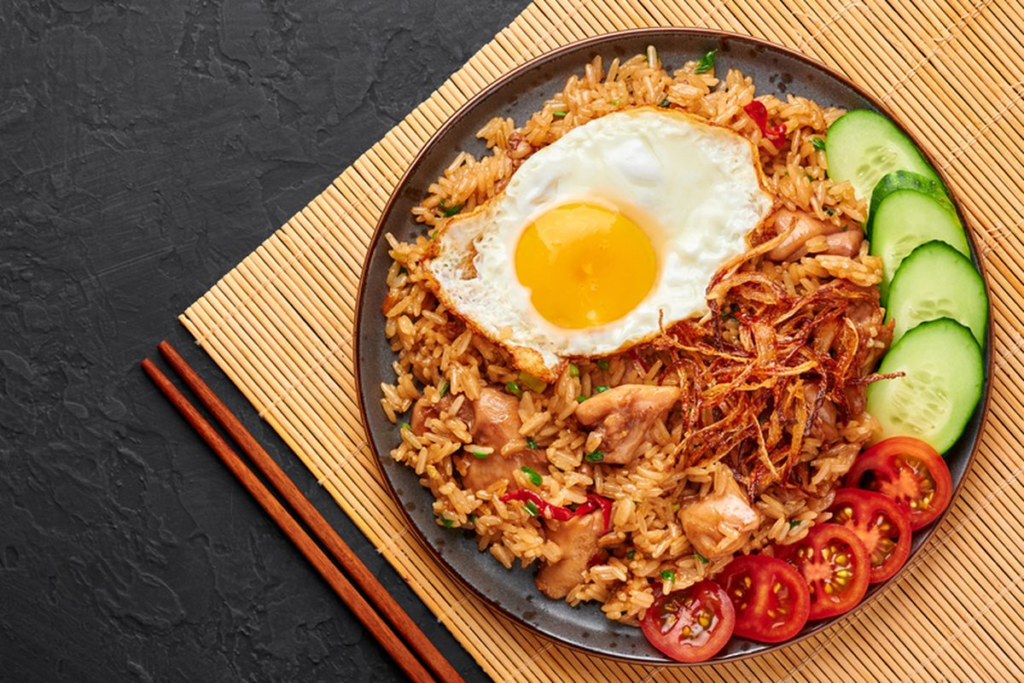
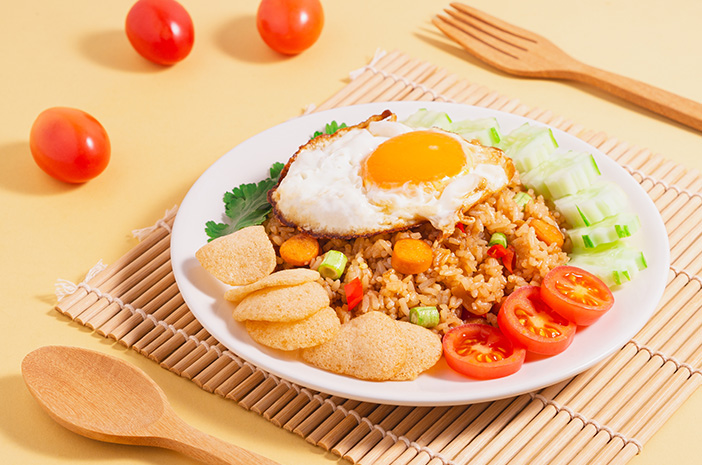
- Color: Deep caramel-brown from kecap manis, not pale
- Grains: Separate, not clumped, some slightly charred
- Garnish: Abundant, colorful, fresh-looking
- Egg: Sunny-side up, crispy lace edges
Texture Symphony:
- Rice: Chewy, separate grains, not mushy
- Protein: Juicy, not overcooked
- Vegetables: Crisp-tender if included
- Shallots: Crispy, not soggy
Flavor Balance (The Indonesian Pyramid):
- Sweet: Kecap manis caramelization
- Salty: Soy sauce and shrimp paste umami
- Spicy: Chili heat that builds gradually
- Aromatic: Fried shallot and garlic foundation
- Funk: Shrimp paste depth (present but not dominant)
🗺️ Regional Variations: Indonesia’s Nasi Goreng Map
1. Nasi Goreng Kampung (Village Style):
- Simpler paste: Just shallots, garlic, chili
- Anchovies (ikan teri) instead of shrimp/chicken
- Served with raw shallots and extra sambal
2. Nasi Goreng Seafood (Coastal):
- Mixed seafood: Shrimp, squid, fish cake
- Less sweet, more shrimp paste
- Garnish: Fried fish crackers instead of prawn
3. Nasi Goreng Jawa (Javanese):
- Sweeter, more kecap manis
- Often includes sweetened shredded beef (abon)
- Garnish: Pickled vegetables (acar)
4. Nasi Goreng Istimewa (“Special”):
- Multiple proteins: Chicken, shrimp, sausage
- More vegetables: Peas, corn, carrot
- Luxury touch: Sometimes topped with satay skewers
5. International Adaptations:
- Dutch influence: With pork chop and pickles
- Singapore style: With curry powder and Chinese sausage
- Malaysian: With sambal belacan and different ketchup
⚠️ The Non-Negotiable Rules
1. Rice Doctrine:
- Day-old only—fresh rice contains too much moisture
- Jasmine preferred—long grain, fragrant, stays separate
- Break up clumps before adding to wok
- No rinsing after cooking (removes starch needed for coating)
2. Wok Commandments:
- Carbon steel wok—proper heat retention
- High heat—the wok should be smoking
- Constant motion—prevents sticking, creates wok hei
- No overcrowding—cooks in batches if needed
3. Sauce Wisdom:
- Kecap manis essential—cannot substitute with soy + sugar
- Add around edges—caramelizes on hot wok
- Taste before serving—balance is everything
- No cornstarch—sauce should coat, not thicken
4. The Forbidden List:
- No fresh rice (will become congee)
- No low heat (will steam instead of fry)
- No skipping shrimp paste (defines the flavor)
- No bottled minced garlic (wrong texture, wrong flavor)
🧪 The Science of Wok Hei
Why It Works:
- Maillard Reaction: High heat creates complex flavors on rice surface
- Starch Retrogradation: Cold rice has crystallized starch that fries better
- Kecap Manis Caramelization: Sugar in sweet soy creates glaze
- Oil Separation: Properly cooked paste releases oil, indicating concentrated flavor
Common Failure Points:
- Mushy rice: Fresh rice, too much stirring, low heat
- Bland flavor: Undercooked paste, insufficient kecap manis
- Burnt paste: Heat too high, not enough stirring
- Clumpy rice: Not broken up before cooking, overcrowded wok
- Soggy garnish: Added too early, not served immediately
☕ Perfect Pairings: The Indonesian Way
Beverages:
- Teh manis: Sweet iced tea
- Es jeruk: Lime juice with sugar
- Bintang beer: Local lager
- Kopi tubruk: Indonesian mud coffee
The Complete Indonesian Meal:
- Starters: Satay with peanut sauce, gado-gado
- Main: Nasi goreng with all garnishes
- Side: Acar (pickled vegetables)
- Dessert: Pisang goreng (fried bananas) or klepon
- Finish: Sweet tea and conversation
Eating Context:
- Breakfast: Simple version with egg
- Lunch: Hearty with multiple proteins
- Midnight snack: From street vendor after going out
- Comfort food: When missing home
📜 The Cultural Experience
Nasi Goreng is Indonesia’s edible common ground:
- Presidential palace to fishing village
- $1 street food to $50 hotel rendition
- Childhood memory for every Indonesian
- National pride when shared with foreigners
The sound of the wok—the rhythmic clanging of spatula, the whoosh of the flame, the sizzle of rice hitting hot metal—is the soundtrack to Indonesian evenings. The aroma of frying paste drifting from warungs is the nation’s perfume.
Final Indonesian Wisdom: “Nasi goreng yang baik tidak butuh banyak bahan, tapi butuh banyak perasaan” — “Good nasi goreng doesn’t need many ingredients, but it needs much feeling.” The wrist action, the heat sense, the tasting adjustments—these cannot be measured.
Serve hot, eat immediately, and taste the soul of Indonesia in every smoky, sweet, spicy bite. Selamat makan! 🇮🇩✨
The World’s Wok Continues Sizzling
From Greece’s steam-sealed lamb parcels to Indonesia’s fiery wok mastery, from Portugal’s blistering tarts to South Africa’s fragrant bakes—these dishes form a global celebration of heat, technique, and shared tables.
Nasi Goreng teaches us: How humble leftovers, through fire and flavor, can become national icons.
May your wok always be seasoned with experience, your rice always properly aged, and your table always filled with those who appreciate the magic of transformation.
Happy cooking, and may your wok hei always be strong! 🌍👨🍳🔥
The world’s flavors sizzle in your wok. Cook with confidence, serve with pride.
Leave a Reply