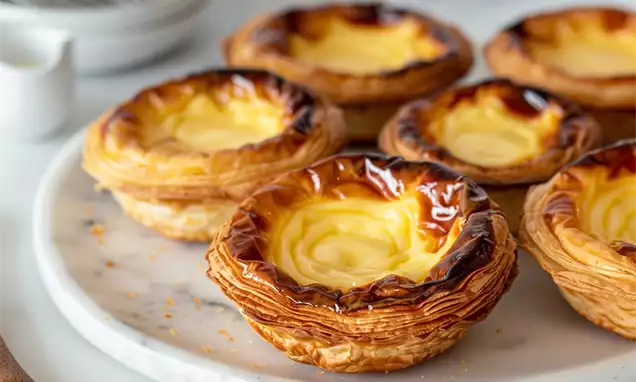
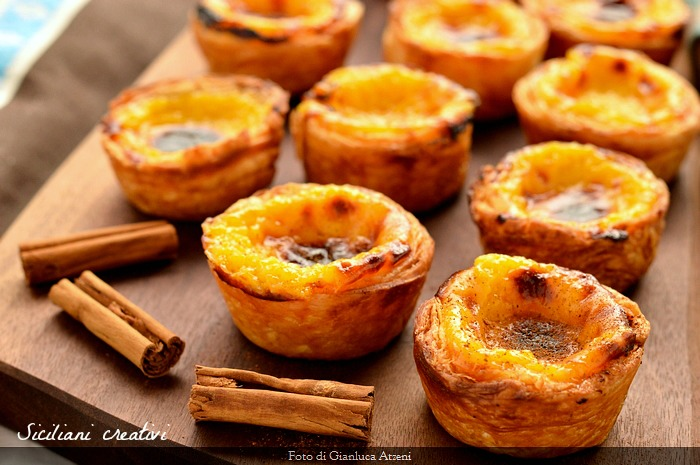
Pastel de nata is Portugal’s sweet alchemy—a humble tart that ascends to divinity through fire. Crisp, layered pastry shatters to reveal silken custard, its surface a constellation of caramelized blisters. More than dessert, it’s Lisbon in a mouthful, a taste of monastic ingenuity turned national obsession.
🕍 A Monastic Invention, A National Treasure
Born in the 1830s at Lisbon’s Jerónimos Monastery, these tarts were created by monks using leftover egg yolks (egg whites were used for starching religious garments). After the Liberal Revolution closed convents, the recipe was sold to the sugar refinery that became Pastéis de Belém, where the original formula remains a guarded secret. Today, Portugal consumes over 20,000 daily, each a small, sweet piece of history.
🛒 Ingredients: The Sacred Elements
The Pastry (Massa Folhada):
- 1 sheet all-butter puff pastry (320–375g, preferably Portuguese massa folhada)
- Alternative: Rough puff pastry (combining flakiness with structure)
- Never: Margarine-based pastry (wrong flavor, wrong texture)
- Flour for dusting
- Melted butter for greasing tins
The Custard (Crema Portuguesa):
- 250 ml whole milk (3.5% fat minimum)
- 250 ml heavy cream (35–40% fat)
- 1 cinnamon stick (Ceylon, not cassia)
- Zest of 1 lemon (peeled in wide strips, no pith)
- 1 vanilla bean (split and scraped) or 2 tsp pure vanilla paste
- Essential: Never artificial vanilla
- 200 g caster sugar (superfine)
- 50 ml water
- 6 large egg yolks (free-range, deep orange yolks preferred)
- 2 tbsp cornstarch (or wheat flour for traditional texture)
- Pinch of fine sea salt
The Finish:
- Icing sugar for dusting
- Ground cinnamon for dusting
- Optional: Lemon zest for garnish
Equipment:
- 12-cup muffin tin (not non-stick—needs to withstand high heat)
- Digital thermometer (critical for sugar syrup)
- Fine-mesh sieve
- Rolling pin
- Pastry brush
⏳ The Ritual: Step-by-Step Mastery
DAY 1 (Optional but Transformative):
1. The Pastry Foundation:
- If using homemade rough puff: Prepare day before, rest overnight
- If using store-bought: Keep chilled until needed
DAY OF BAKING:
2. The Pastry Sculpting:
- Lightly flour work surface.
- Unroll puff pastry (if using sheet).
- Roll tightly from short end into firm log (4cm diameter).
- No gaps—air pockets cause uneven baking.
- Wrap in parchment, chill 30 minutes minimum (up to 2 hours).
- Slice log into 12 even discs (2.5–3cm thick).
- Working quickly, press each disc into greased muffin tin:
- Center disc, flatten slightly with fingers
- Push from center outward, creating thin wall
- Extend 2–3mm above rim (custard rises)
- Ensure even thickness—no thin spots
- Freeze tins 15 minutes while making custard.
3. The Custard Alchemy:
Part A: The Infusion:
- Combine milk, cream, cinnamon, lemon zest, vanilla in saucepan.
- Heat over medium until steaming and tiny bubbles form at edges.
- Never boil—custard will curdle.
- Remove from heat, cover, steep 30 minutes (minimum 15).
Part B: The Sugar Syrup (Point of No Return):
- Combine sugar and water in small, heavy saucepan.
- No stirring after sugar dissolves—causes crystallization.
- Cook over medium-high to 108°C/226°F (soft-ball stage).
- Watch closely: 106–110°C range is critical
- Too low: Custard won’t caramelize properly
- Too high: Sugar hardens, creates gritty texture
Part C: The Emulsion:
- Whisk egg yolks, cornstarch, salt until smooth and pale.
- Temper: Slowly drizzle hot syrup into yolks while whisking vigorously.
- Constant whisking prevents scrambled eggs.
- Mixture will thicken slightly, become glossy.
- Strain infused milk into yolk mixture through fine sieve.
- Whisk gently until completely combined.
- Cool custard to room temperature (speed by setting bowl in ice bath).
4. The Assembly:
- Preheat oven to maximum temperature (250–275°C/480–530°F).
- Many home ovens: 250°C is maximum
- Professional: 300°C+ for authentic blisters
- Stir custard gently (no bubbles).
- Fill shells to 2mm below rim (custard expands).
- Optional: Place tin on baking sheet for easier handling.
5. The Inferno (The Blistering):
- Bake on lowest rack (bottom heat is crucial).
- Time: 12–18 minutes depending on oven.
- Watch for transformation:
- Minutes 4–6: Custard sets around edges
- Minutes 8–10: Surface starts caramelizing
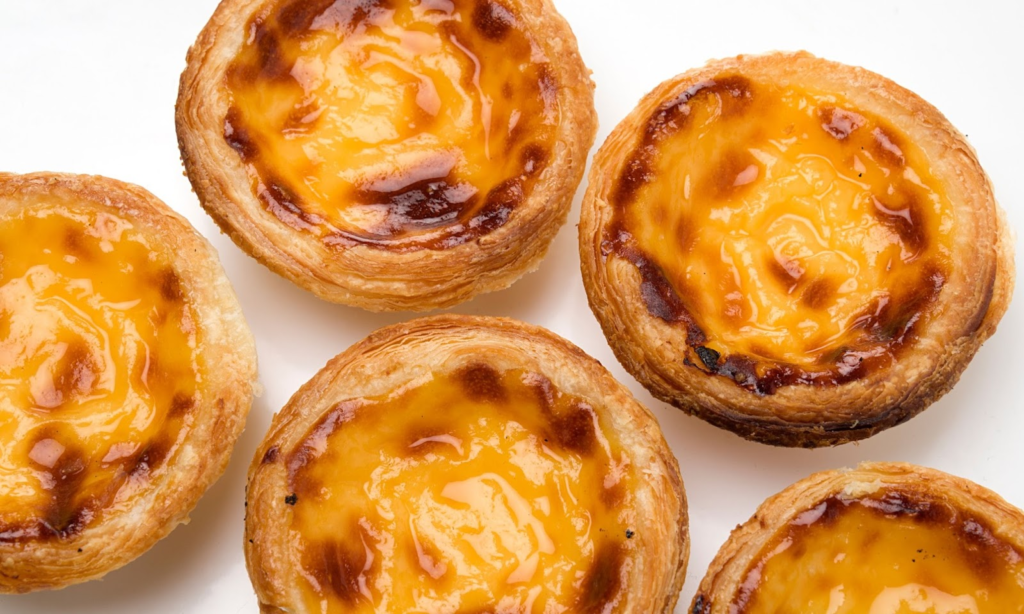
- Minutes 12–15: Blisters form like craters
- Perfect: Deep golden with blackened spots
- Rotate pan halfway if heating uneven.
- Remove when: Custard puffed, pastry golden-brown.
6. The Immediate Aftercare:
- Cool in tin 2 minutes only.
- Transfer to wire rack using offset spatula.
- Careful: Custard is molten, pastry fragile.
- Dust with icing sugar and cinnamon immediately.
- Serve within 15–30 minutes of baking.
☕ The Portuguese Way of Eating
The Café Ritual:
- Order: “Um pastel de nata e um café” (one tart and coffee)
- Coffee: Bica (espresso) or galão (with milk)
- Seasoning: Additional cinnamon and sugar on side
- Timing: Morning or afternoon—never after dinner
The Eating Technique:
- Observe the blister pattern
- Smell the caramel and cinnamon
- Tap the pastry—should sound crisp
- First bite: Through all layers at once
- Second bite: Custard-only to appreciate texture
- Finish with coffee to cleanse palate
🎯 The Hallmarks of Perfect Pastel de Nata
Visual Perfection:
- Caramelized surface: Charred spots, not uniform brown
- Visible blisters: Irregular, volcanic appearance
- Pastry layers: Visible flakiness on sides
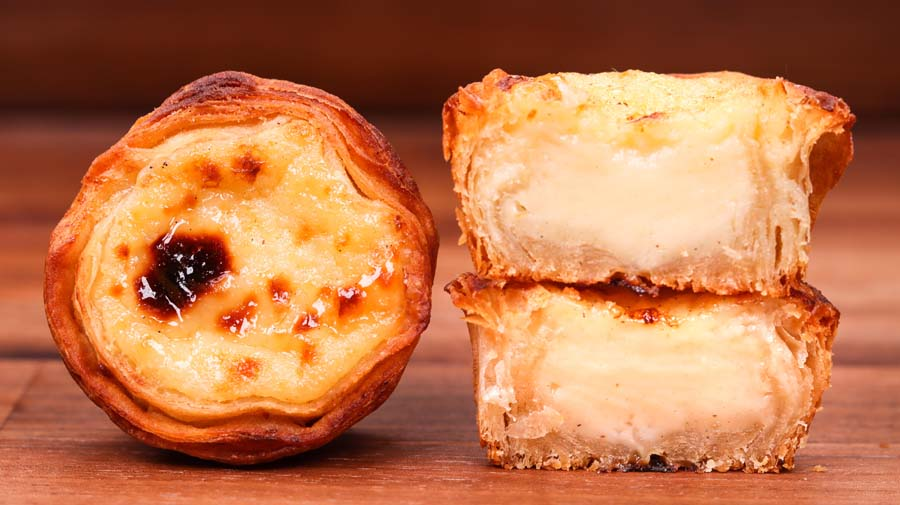
- Color contrast: Dark top against pale custard interior
Texture Symphony:
- Pastry: Shattering crispness, not tough or chewy
- Custard: Silken, creamy, not eggy or gelatinous
- Caramelized top: Slight crunch giving way to cream
- Structure: Holds shape when lifted, not collapsing
Flavor Balance (The Portuguese Trinity):
- Sweet: Caramelized sugar top
- Rich: Egg yolk and cream custard
- Spice: Cinnamon and vanilla whispers
- Butter: From pastry, not greasy
- Brightness: Lemon zest background note
🗺️ Regional Variations: Portugal’s Tart Map
1. Pastéis de Belém (The Original):
- Custard: Cinnamon-forward, slightly grainier texture
- Pastry: Extra flaky, almost layered like phyllo
- Served: Only warm, with powdered sugar and cinnamon
- Secret: Recipe known to only three people at any time
2. Lisbon Café Style:
- Smaller size, slightly sweeter
- Smoother custard, less caramelization
- Served all day, often reheated
3. Northern Portugal:
- Denser custard, sometimes with port wine infusion
- Thicker pastry base
- Less blistering, more uniform top
4. Modern Interpretations:
- Chocolate or matcha custard
- Miniature versions for parties
- Salted caramel variation
- Vegan versions with coconut milk
⚠️ The Non-Negotiable Rules
1. Temperature Dogma:
- Maximum oven heat—blisters require 250°C+
- Sugar syrup at 108°C exactly—use thermometer
- Custard cool before filling—hot custard melts pastry
- Pastry ice-cold before baking—prevents shrinkage
2. Custard Commandments:
- Whole milk and cream—no low-fat substitutions
- Fresh egg yolks—older yolks create eggy taste
- Constant whisking during tempering—no scrambling
- No bubbles in filled cups—creates holes in custard
3. Pastry Principles:
- All-butter puff—margarine lacks flavor, burns differently
- Even thickness—thin spots burn, thick spots stay doughy
- Extended above rim—custard rises during baking
- No stretching—creates tough gluten strands
4. The Forbidden List:
- No water bath (ruins pastry crispness)
- No refrigeration after baking (pastry soggy, custard rubbery)
- No artificial vanilla (cloying, chemical aftertaste)
- No pre-made custard (wrong texture, wrong flavor)
🧪 The Science of the Blister
Why It Works:
- Sugar Concentration: High sugar content rises to surface
- Extreme Heat: Sugar caramelizes rapidly at 180°C+
- Protein Setting: Egg proteins coagulate from bottom up
- Steam Expansion: Moisture creates pockets that burst through surface
- Pastry Protection: Butter layers insulate, cook to perfect flakiness
Common Failure Points:
- No blisters: Oven not hot enough, sugar syrup wrong temperature
- Soggy bottom: Pastry too thin, custard too warm when filling
- Burst sides: Pastry too thick, oven heat too low initially
- Rubbery custard: Overbaked, too many egg whites accidentally included
- Burnt top: Oven too hot, tarts too close to element
🍷 Perfect Pairings: The Portuguese Way
Beverages:
- Coffee: Bica (espresso) or meia de leite (half milk)
- Tea: Chá preto (black tea) with lemon
- Fortified Wine: Port or Madeira (for special occasions)
- Dessert Wine: Moscatel de Setúbal
The Complete Portuguese Experience:
- Morning: Pastel de nata at café counter
- Afternoon: With afternoon coffee break
- Festival: At saints’ day celebrations
- Home: Freshly baked for weekend guests
Serving Presentation:
- On small plate with paper doily
- Dusting box for cinnamon and sugar on side
- Espresso cup and small glass of water
- Never stacked—they’ll stick together
📜 The Cultural Experience
In Portugal, pastel de nata is daily ritual:
- Morning stop before work
- Afternoon treat during break
- Tourist pilgrimage to Belém
- Family tradition—grandmothers making their version
The sound of biting into a fresh pastel—the crisp shatter, the creamy give—is as Portuguese as fado music. The aroma of scorched sugar and cinnamon wafting from bakery doors is Lisbon’s signature scent.
Final Portuguese Wisdom: “O segredo está no fogo” — “The secret is in the fire.” The courage to burn the top, the patience to chill the pastry, the precision of the sugar syrup—this is the holy trinity of pastel perfection.
Serve warm, eat joyfully, and let each bite transport you to a sun-drenched Lisbon sidewalk. Bom apetite! 🇵🇹✨
The World’s Sweet Journey Continues
From Mumbai’s spicy street food to Rome’s minimalist pasta, from Thailand’s fiery salads to Sweden’s cozy buns, from France’s maritime pots to South Africa’s fragrant bakes, and now to Portugal’s blistering tarts—these dishes form a global mosaic of culinary genius.
Pastel de Nata teaches us: How humble ingredients, through precise technique and brave fire, can become icons.
May your oven burn hot with ambition, your custard shine with patience, and your table always have room for one more warm, perfect tart.
Happy baking, and may your tarts always blister beautifully! 🌍👨🍳🥧
The world’s sweetness is in your hands. Bake it with courage, share it with joy.
Leave a Reply