Kanelbulle is more than a pastry—it’s Sweden’s edible hug, a symbol of mys (cozy contentment), and the undisputed star of fika (the sacred Swedish coffee break). Softer, more nuanced, and elegantly shaped than its American cousin, this cardamom-kissed cinnamon bun represents Swedish hospitality, design sensibility, and love for life’s simple pleasures.
🇸🇪 A National Obsession, A Cultural Institution
Born in the 1920s as home baking gained popularity with affordable ingredients, the kanelbulle became Sweden’s definitive pastry. Its cultural pinnacle arrived in 1999 with the establishment of Kanelbullens Dag (Cinnamon Bun Day) on October 4th—now celebrated nationwide with millions of buns consumed. This isn’t just food; it’s edible Swedishness.
🛒 Ingredients: The Swedish Pantheon
The Dough (The Foundation of Mys):
- 500 g strong white bread flour (vetemjöl special)
- Protein content: 12–14% for perfect chew
- Alternative: All-purpose flour with 1 tbsp vital wheat gluten
- 75 g granulated sugar (not reduced—sweetness is essential)
- 10 g instant yeast (jäst) or 15g fresh yeast
- 1½ tsp freshly ground cardamom (green cardamom pods, seeds ground)
- Non-negotiable: Pre-ground lacks floral magic
- ½ tsp fine sea salt (avoid iodized)
- 300 ml whole milk (3.5% fat), lukewarm (37°C/98°F)
- 75 g unsalted butter (Smör), softened but not melted
- 1 large egg (room temperature)
- Zest of ½ orange (optional but traditional in some families)
The Filling (The Heart):
- 100 g unsalted butter, very soft but not oily
- 100 g light brown sugar (farin or muscovado for depth)
- Traditional: Equal parts white and brown sugar
- 3 tbsp ground Ceylon cinnamon (true cinnamon, not cassia)
- Note: Cassia is stronger; reduce to 2 tbsp if using
- ½ tsp ground cardamom (reinforcing dough flavor)
- Optional: 50g finely chopped almonds or marzipan
The Finish (The Swedish Signature):
- 1 egg + 1 tbsp milk for egg wash
- Pearl sugar (pärlsocker) for topping
- Substitute: Crushed sugar cubes or coarse demerara
- Simple syrup: 100ml water + 100g sugar boiled 3 minutes
- Optional: Chopped almonds for some buns (variety)
Equipment:
- Stand mixer with dough hook (traditional by hand is respected)
- Baking sheets lined with parchment
- Pastry brush (natural bristle for syrup)
- Digital scale (Swedes measure everything in grams)
- Rolling pin (without handles preferred)
🕰️ The Fika Ritual: Step-by-Step Mastery
DAY 1 (Optional but Superior):
1. The Overnight Magic:
- Prepare dough through first proof.
- After doubling, punch down, shape into ball.
- Refrigerate in oiled bowl overnight (12–24 hours).
- Result: Deeper flavor, easier handling, scheduled baking.
DAY OF BAKING:
2. The Dough Alchemy:
- Warm milk to baby-bottle temperature (37°C/98°F).
- Grind cardamom fresh—remove pods, seeds only, mortar and pestle.
- In stand mixer, combine flour, sugar, yeast, cardamom, salt.
- Add milk, softened butter, egg (and orange zest if using).
- Knead with dough hook 8–10 minutes until:
- Windowpane test: Stretches thin without tearing
- Temperature: 24–26°C (75–79°F)—warm but not hot
- Note: Swedes often knead by hand—a meditative process.
3. The First Rise (Jäsning):
- Form dough into smooth ball.
- Place in lightly oiled bowl, cover with damp cloth.
- Proof at room temperature (22°C/72°F ideal) for 45–75 minutes.
- Test: Doubled in size, finger indentation remains.
4. The Filling Ritual:
- Mix butter until creamy (not whipped).
- Combine sugars, cinnamon, cardamom in separate bowl.
- Butter consistency is critical: Spreadable but not melting.
5. The Swedish Shape (The Art):
The Rectangle:
- Roll dough to 40×50cm rectangle (3mm thickness).
- Orientation: Long side facing you.
The Spread:
- Spread butter edge-to-edge with offset spatula.
- Sprinkle sugar-cinnamon mix evenly, press lightly.
The Tight Roll:
- From long side, roll tightly but gently into log.
- Seam side down, adjust to even thickness.
The Swedish Cut:
- Not sliced like American rolls.
- With sharp knife, cut ¾ through the log lengthwise.
- Open like a book, cut side up.
- Twist halves together gently, keeping cut sides visible.
- Cut into 3cm pieces—these will be your buns.
The Classic Knot (Kanelbullens Knut):
- Take cut piece, stretch slightly.
- Twist ends in opposite directions.
- Wrap around fingers to create loose knot.
- Tuck ends under or through center.
- Place on parchment, cut side facing up.
Alternative Shapes:
- Snails (Sniglar): Traditional spiral, cut from log
- Braids (Flätor): With multiple strands
- Roses (Rosor): For special occasions
6. The Second Proof:
- Arrange buns 5cm apart on baking sheets.
- Cover loosely with cloth or plastic.
- Proof 30–45 minutes until puffy but not doubled.
- Test: Gently pressed, dough slowly springs back.
7. The Baking Ceremony:
- Preheat oven to 200°C (400°F) conventional.
- Egg wash: Whisk egg and milk, brush gently avoiding sugar.
- Sprinkle generously with pearl sugar.
- Bake 12–15 minutes until:
- Color: Golden, not brown
- Sound: Hollow when tapped underneath
- Internal temperature: 88–91°C (190–195°F)
- Rotate pans halfway for even coloring.
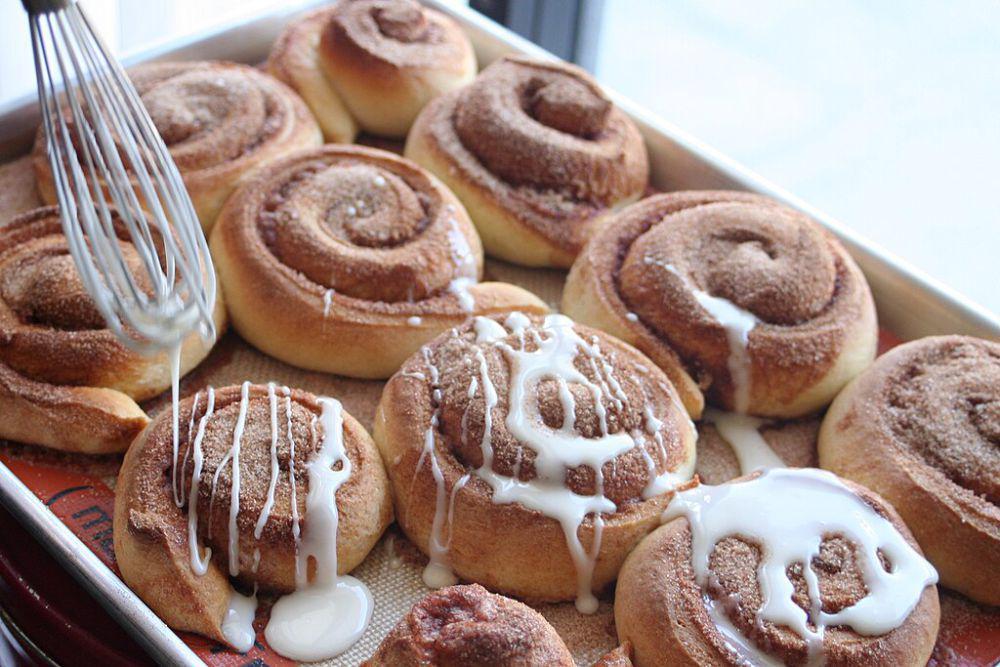
8. The Syrup Glaze (Sockerglasur):
- While baking, boil water and sugar 3 minutes.
- Brush warm buns immediately from oven.
- Technique: Single, confident strokes
- Result: Shiny, slightly sticky, sweet crust
9. The Cooling Discipline:
- Transfer to wire rack after 5 minutes.
- Cool 20 minutes minimum before eating.
- Swedish rule: Warm, not hot—flavors need to settle
☕ The Perfect Fika Presentation
Traditional Serving:
- On porcelain plate (never paper)
- With linen napkin (always)
- Coffee: Brewed filter (not espresso), black or with milk
- Optional: Glass of milk for children
The Fika Spread:
- Kanelbulle (centerpiece)
- Other pastries (maybe a chokladboll or prinsesstårta slice)
- Fresh fruit (grapes, apple slices)
- Cheese plate (for savory balance)
- Flowers on table (always)
🎯 The Hallmarks of Perfect Kanelbulle
Visual Perfection:
- Golden, not brown—caramelization is gentle
- Visible layers from twisting technique
- Pearl sugar intact—not melted into glaze
- Symmetrical but imperfect—homemade charm
Texture Symphony:
- Exterior: Slight crisp from sugar, tender underneath
- Interior: Feathery-soft, slightly chewy, not cakey
- Filling: Melted into layers, not oozing out
- Crumb: Even, fine, not dense
Flavor Balance (The Swedish Trinity):
- Sweet: From sugar and syrup (present but not dominant)
- Spice: Cardamom (foreground) and cinnamon (background)
- Richness: Butter and milk without greasiness
- Brightness: Hint of orange zest if included
🗺️ Regional Variations: Sweden’s Bun Map
1. Stockholm Style:
- More cardamom, sometimes added to filling
- Larger size, generous pearl sugar
- Often marzipan in filling
2. Gothenburg Style:
- Lighter on cardamom
- Smaller, daintier buns
- Sometimes vanilla sugar in glaze
3. Skåne (Southern) Style:
- Butterier, sometimes laminated dough
- Cinnamon forward, cardamom subtle
- Often topped with chopped almonds
4. Modern Interpretations:
- Saffron buns (Lussekatter) spiced variation
- Chocolate-cinnamon filling
- Vegan versions with oat milk and margarine
- Gluten-free adaptations
⚠️ The Non-Negotiable Rules
1. Cardamom Doctrine:
- Green cardamom pods only—black is too medicinal
- Grind fresh for each batch—volatile oils dissipate
- Balance: Should whisper, not shout
2. Butter Protocol:
- European-style butter (82-86% fat)
- Soft but not melted—critical for layering
- Unsalted always—control seasoning
3. Temperature Commandments:
- Milk lukewarm—hot kills yeast, cold slows it
- Dough 24-26°C after kneading—optimal yeast activity
- Cool before eating—Swedes are horrified by burning tongues
4. The Forbidden List:
- No cream cheese frosting (American heresy)
- No raisins (controversial—some Swedes accept, most purists reject)
- No gooey center (should be moist, not wet)
- No reheating in microwave (steams and ruins texture)
🧪 The Science of Swedish Softness
Why It Works:
- Enriched Dough: Butter and milk tenderize gluten
- Proper Hydration: Milk creates softer crumb than water
- Cardamom’s Oils: Act as natural dough conditioner
- Sugar Syrup: Creates hygroscopic glaze, retains moisture
Common Failure Points:
- Tough buns: Over-kneading, too much flour during rolling
- Flat buns: Over-proofing, old yeast, too-warm proofing
- Dry buns: Over-baking, insufficient syrup, low-fat milk
- Butter leakage: Filling too soft, dough rolled too thin
📅 The Fika Culture
In Sweden, kanelbulle is more than pastry—it’s social sacrament:
- Daily ritual: 3pm fika is nearly universal
- Workplace tradition: Colleagues gather, hierarchy disappears
- Hospitality: Offering bun with coffee is basic courtesy
- Seasonal celebration: Cinnamon Bun Day nationwide
The sound of pearl sugar crunching, the scent of cardamom, the warmth of fresh coffee—this is Swedish comfort, the essence of mysig (cozy).
Final Swedish Wisdom: “A good kanelbulle should make you want to sit down, slow down, and talk to someone you love. It’s not fast food—it’s slow joy.”
Serve with warmth, share with generosity, and let each bite transport you to a Swedish kitchen where time moves at the speed of conversation.
A World of Comfort Complete
From Mumbai’s vibrant streets to Rome’s minimalist mastery, from Thailand’s fiery markets to Brittany’s buttery ovens, from Peru’s coastal freshness to England’s nostalgic sweets, from Middle Eastern fire to Basque emulsions, from Egypt’s glorious layers to Sweden’s cozy fika—these twelve dishes form a global tapestry of comfort, technique, and shared humanity.
Each teaches us something essential:
Kanelbulle: How simplicity and ritual create contentment
(And all the others as previously celebrated)
May your kitchen always be filled with the scents of distant places, your hands skilled in timeless techniques, and your table surrounded by those who understand that sharing food is the deepest form of human connection.
Happy baking, and trevlig fika! 🇸🇪☕✨
The world’s warmth is in your oven. Now, go create your own fika moment.
Leave a Reply