
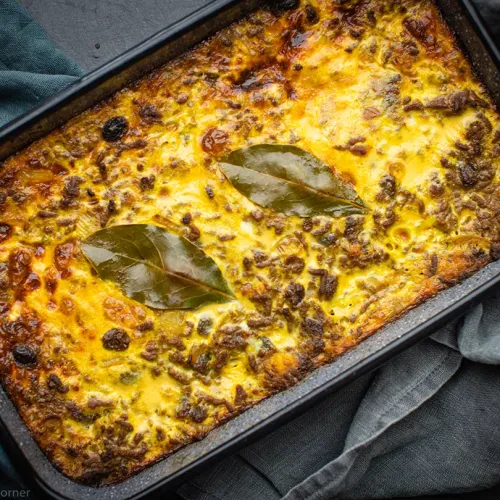
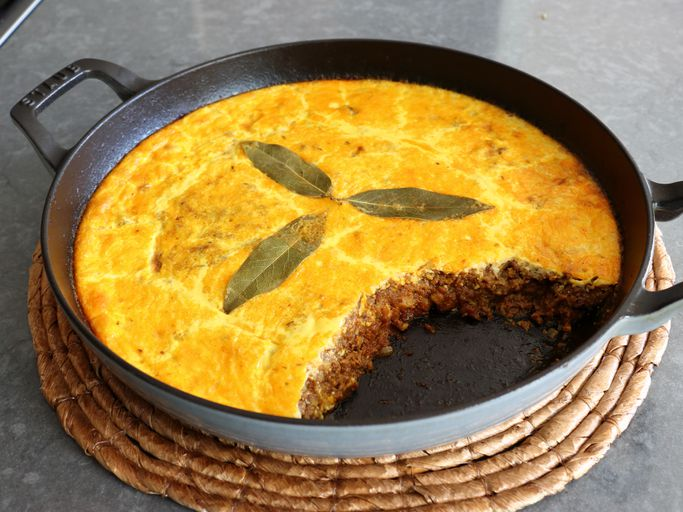
Bobotie is South Africa’s edible tapestry—a fragrant, sweet-savoury mince bake where continents collide in perfect harmony. With its golden custard crown atop spiced meat, it represents the very soul of South African cuisine: Dutch colonial technique meeting Cape Malay spice, indigenous ingredients embracing immigrant traditions. This is comfort food as cultural artifact.
🌍 A Taste of the Rainbow Nation’s History
Born in the 17th-century Cape Malay kitchens of slaves from Indonesia and Malaysia, bobotie evolved through Dutch and British colonial influences to become South Africa’s national dish. Its name derives from the Indonesian bobotok, but its soul is uniquely South African—a delicious embodiment of the nation’s complex, layered history.
🛒 Ingredients: The Cultural Fusion in a Bowl
The Foundation:
- 1 kg beef or lamb mince (traditionally beef with some pork fat)
- Alternative: Game mince (springbok or ostrich) for authentic South African twist
- Fat content: 15–20% for moisture without greasiness
The Aromatic Trinity:
- 2 large onions, finely diced (white or yellow)
- 3–4 garlic cloves, minced
- 2 tbsp vegetable oil or butter (traditional uses both)
The Spice Matrix (The Cape Malay Soul):
- 2 tbsp Cape Malay curry powder (Rajah or similar)
- If unavailable: 1 tbsp mild curry + 1 tsp each coriander, turmeric, fenugreek
- 1 tsp ground turmeric (for color and earthiness)
- 1 tsp ground cumin (toasted seeds ground fresh)
- 1 tsp ground coriander
- ½ tsp ground cinnamon (Ceylon, not cassia)
- ½ tsp ground ginger (or 1 tbsp fresh grated)
- ¼ tsp ground cloves (use sparingly)
- ¼ tsp grated nutmeg (freshly grated preferred)
- 2–3 dried curry leaves (optional but authentic)
The Sweet-Sour Balance (The Signature):
- 2 slices white bread (stale preferred), crusts removed
- 200 ml whole milk (for soaking bread and custard)
- 100 g raisins or sultanas (soaked in warm water 10 minutes)
- 2 tbsp apricot jam (or peach/mango chutney)
- 2 tbsp chutney (Mrs. H.S. Ball’s Original is canonical)
- 1 tbsp smooth fruit chutney for extra depth
- 2 tbsp vinegar (brown malt or apple cider)
- Alternative: Juice of ½ lemon
- 1 tbsp Worcestershire sauce (British influence)
- 2 tbsp slivered almonds (traditional garnish)
The Golden Crown:
- 3 large eggs
- 250 ml milk (full-cream)
- ½ tsp turmeric (for color)
- 4–6 fresh bay leaves (not dried—crucial for aroma)
- Pinch of salt and white pepper
For Serving (The Traditional Way):
- Geelrys (yellow rice with raisins and cinnamon)
- Sambals (fresh condiments): chutney, coconut, banana, tomato-onion
- Blatjang (South African fruit chutney)
- Cabbage salad or green salad
🕰️ The Ritual: Step-by-Step Mastery
DAY 1 (Optional but Transformative):
1. The Marination Magic:
- After step 4 (adding spices), cool mince mixture completely.
- Refrigerate overnight (minimum 8 hours).
- Result: Flavors deepen dramatically, spices meld.
DAY OF SERVING:
2. The Bread Soak (The Moisture Secret):
- Remove crusts from stale bread (fresh works but stale absorbs better).
- Soak in 200ml milk for 10 minutes.
- Squeeze firmly—retain milk for custard.
- Crumble bread with fingers into bowl.
3. The Foundation Fry:
- Heat oil/butter in large, heavy pot over medium heat.
- Sauté onions 8–10 minutes until translucent and sweet (not browned).
- Add garlic, cook 1 minute until fragrant.
- Add mince, breaking up thoroughly with wooden spoon.
- Brown 8–10 minutes until moisture evaporates and meat caramelizes.
- Critical: Don’t rush browning—flavor develops here.
4. The Spice Awakening:
- Push meat to sides, toast spices in center 30 seconds until fragrant.
- Stir thoroughly to coat every meat particle.
- Cook 2 minutes to bloom spices.
5. The Sweet-Sour Symphony:
- Add crumbled soaked bread, mixing well.
- Stir in raisins, jams, chutneys, vinegar, Worcestershire.
- Season: 1½ tsp salt, ½ tsp black pepper.
- Simmer uncovered 10–15 minutes until mixture is moist but not wet.
- Taste and balance: Should be sweet, sour, spicy in harmony.
- Cool slightly (15 minutes) before transferring to dish.
6. The Assembly:
- Preheat oven to 180°C (350°F) conventional (no fan).
- Grease ovenproof dish (20x30cm or similar).
- Press meat mixture firmly into dish, smoothing top.
- Optional: Scatter slivered almonds over meat.
7. The Custard Crown:
- Whisk eggs, milk, turmeric, salt, white pepper until smooth.
- Pour gently over meat—don’t disturb surface.
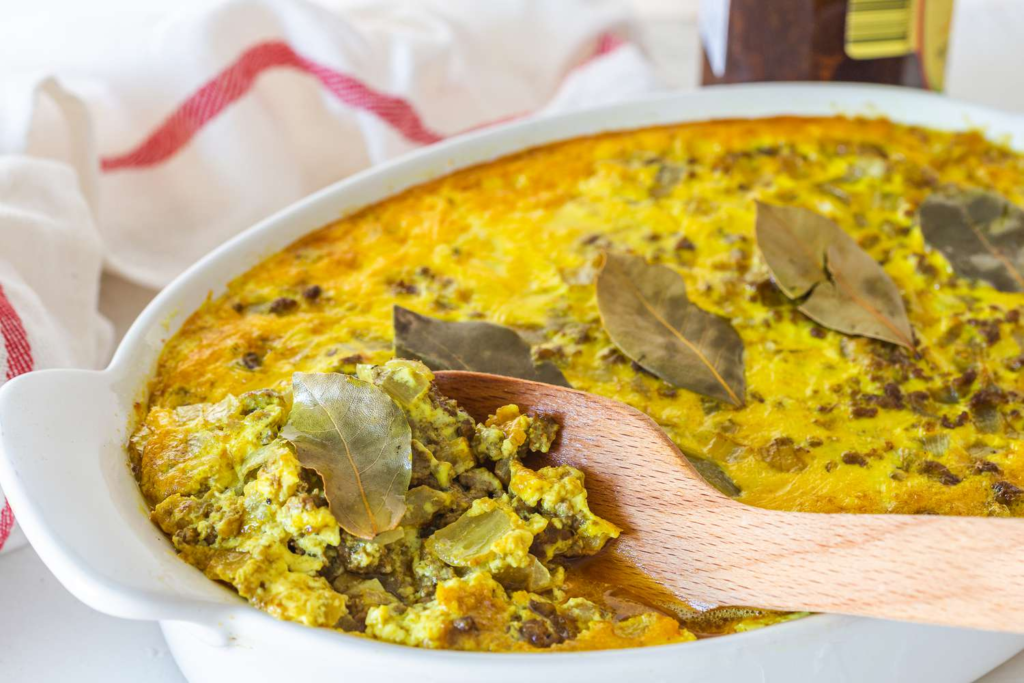
- Place bay leaves decoratively on top (pressed lightly into custard).
- Note: Bay leaves are aromatic garnish only—remove before eating.
8. The Baking Ceremony:
- Bake 35–45 minutes on middle rack.
- Watch for: Custard set but still slightly wobbly in center.
- Final touch: Broil 2–3 minutes for deeper golden top (watch carefully!).
- Rest 10 minutes before serving—custard continues setting.
🍚 The Traditional Serving: A Rainbow Platter
The Classic Presentation:
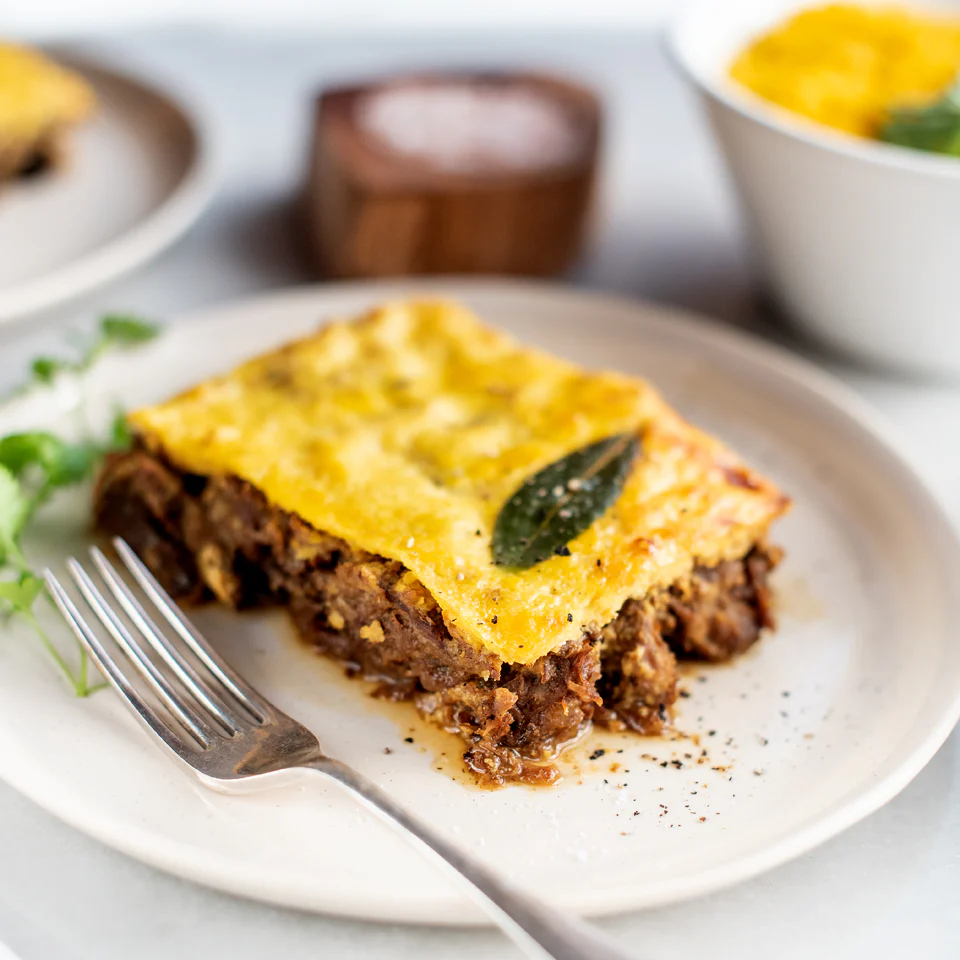
- Center: Bobotie, sliced into squares
- Side 1: Geelrys (yellow rice with cinnamon stick and raisins)
- Side 2: Small bowls of sambals:
- Coconut: Toasted with sugar
- Banana: Sliced with lemon juice
- Tomato & onion: Freshly chopped
- Chutney: Extra for spooning
- Garnish: Fresh bay leaves (decorative)
How to Eat:
- One bite should include bobotie, rice, and a sambal
- Mix combinations to discover favorite pairings
- Use chutney as condiment, not sauce mixed throughout
🎯 The Hallmarks of Perfect Bobotie
Visual Perfection:
- Golden custard crown: Set but tender, lightly browned
- Visible bay leaves: Pressed decoratively, not submerged
- Firm edges: Clean slices when cut
- Moist interior: No dry spots in mince
Texture Symphony:
- Custard: Silky, tender, not rubbery
- Mince: Moist but not wet, fine but not pasty
- Raisins: Plump, not shriveled
- Bread: Invisible—completely absorbed
Flavor Balance (The Cape Malay Quartet):
- Sweet: Apricot, raisins, chutney
- Sour: Vinegar or lemon juice
- Spice: Warm curry notes without heat
- Savory: Well-browned meat foundation
- Aromatic: Bay leaf perfume throughout
🗺️ Regional Variations: South Africa’s Bobotie Map
1. Cape Malay Classic (Most Traditional):
- Lamb mince preferred
- More dried fruit: apricots alongside raisins
- Toasted almonds in topping
- Served with at least three sambals
2. Afrikaans Farmhouse Style:
- Beef-pork blend (50/50)
- Less sweet, more savory
- Potato topping instead of or with custard
- Cabbage salad as side
3. Modern Gourmet:
- Venison or ostrich mince
- Quail eggs in individual ramekins
- Micro-herb garnish
- Deconstructed presentation
4. Vegetarian Adaptation:
- Lentil-mushroom base
- Sweet potato in mixture
- Nutritional yeast for umami
- Same spicing and custard topping
⚠️ The Non-Negotiable Rules
1. Spice Doctrine:
- Cape Malay curry powder if possible—different from Indian curry
- Toast spices in pan—unlocked oils create depth
- Balance sweet-sour: Taste after simmering, adjust with lemon or sugar
2. Custard Commandments:
- Room temperature ingredients—cold milk causes uneven cooking
- Gentle pouring—don’t break meat surface
- No water bath—traditional method creates superior texture
- Rest after baking—custard sets fully
3. Meat Preparation:
- Brown thoroughly—pale meat lacks flavor
- Break up completely—no large chunks
- Drain excess fat after browning if necessary
- Cool slightly before adding custard
4. The Forbidden List:
- No breadcrumbs instead of soaked bread
- No omitting bay leaves (they’re essential to aroma)
- No cheddar cheese topping (not traditional)
- No serving piping hot—flavors need to settle
🧪 The Science of the Custard Crown
Why It Works:
- Protein Coagulation: Eggs set at 63–68°C (145–155°F), protecting meat from drying
- Starch from Bread: Acts as binder and moisture retainer
- Fat Emulsion: Egg yolks and milk create tender custard
- Bay Leaf Volatiles: Heat releases aromatic oils that perfume entire dish
Common Failure Points:
- Watery custard: Too much milk, underbaked, meat too wet
- Rubbery custard: Overbaked, oven too hot
- Separated layers: Meat too hot when custard added, poured too forcefully
- Bland flavor: Underseasoned, spices not toasted, meat not browned enough
🍷 Perfect Pairings: The South African Way
Wines:
- Pinotage: South Africa’s signature red (fruity, smoky)
- Chenin Blanc: Crisp white to cut richness
- Rosé: Dry, Provençal-style
- Cape Ruby Port: With dessert afterward
The Complete South African Meal:
- Starters: Biltong and droëwors, melktert tartlets
- Main: Bobotie with all accompaniments
- Salad: Marinated beetroot and onion
- Dessert: Malva pudding or koeksisters
- Coffee: With amarula cream
Braai (Barbecue) Context:
- Bobotie often baked ahead, served at room temperature
- Accompanied by braaibroodjies (grilled sandwiches)
- Cold beers (Castle Lager or Black Label)
- Social, casual serving style
📜 The Cultural Experience
Bobotie is South Africa on a plate:
- Heritage Day (September 24) staple
- Sunday family lunch tradition
- School hostel food memory for generations
- Diplomatic dish served to visiting dignitaries
The aroma of baking bobotie—curry spices, sweet fruit, bay leaves—evokes childhood memories for millions of South Africans. It’s a dish that crosses cultural boundaries, appearing on tables in townships, suburbs, and farmhouses alike.
Final South African Wisdom: “Bobotie is like our country—different ingredients that argue a bit in the pot, but come out better together. Don’t be shy with the fruit, don’t rush the browning, and always use enough bay leaves to make the house smell like happiness.”
Serve with pride, share generously, and taste the history in every bite. Lekker eet! (Delicious eating!) 🇿🇦✨
The Culinary World Tour Continues
From Mumbai’s vibrant chaos to Rome’s minimalist purity, from Thailand’s fiery markets to Sweden’s cozy fika, from France’s maritime elegance to Latin America’s golden griddles, and now to South Africa’s fragrant fusion—these dishes form a global tapestry of flavor, technique, and shared humanity.
Bobotie teaches us: How history layers flavors, and how comfort can hold complexity.
May your kitchen always be a place where cultures meet and transform, where simple ingredients become extraordinary through care and tradition.
Happy cooking, and may your custard always crown perfectly! 🌍👨🍳🍛
The world’s stories are in your oven. Bake them with respect, serve them with joy.
Leave a Reply