Arepas are more than corn cakes—they are edible canvases, cultural identifiers, and the daily bread of millions. These golden, versatile discs of pre-cooked corn flour serve as plates, utensils, and comfort, transforming simple ingredients into handheld meals that fuel nations from breakfast through midnight cravings.
🌽 An Indigenous Legacy, A Modern Staple
Born from indigenous corn traditions dating back over 3,000 years, arepas evolved through Spanish colonization into today’s national obsession. Venezuela and Colombia’s friendly rivalry over arepa supremacy reflects their shared yet distinct culinary identities—Venezuela’s stuffed, fork-and-knife creations versus Colombia’s thinner, topping-laden versions. This isn’t just food; it’s edible nationalism.
🛒 Ingredients: The Sacred Trio
The Foundation (Non-Negotiable):
- 500 g pre-cooked white corn flour (harina PAN or masarepa)
- White: Traditional, neutral flavor
- Yellow: Slightly sweeter, vibrant color
- NOT: Masa harina (for tortillas), NOT polenta, NOT regular cornmeal
- 750–800 ml warm water (40–45°C / 104–113°F)
- Temperature matters: Warmth activates dough properly
- 1½ tsp fine sea salt
- Adjust: Less if fillings are salty
Optional Enhancements:
- 1 tbsp vegetable oil or melted butter (for richer dough)
- ¼ cup grated cheese (queso blanco, mozzarella) mixed into dough
- 1 tbsp sugar (for slightly sweet breakfast arepas)
- 1 tsp annatto powder (achiote) for color and earthiness
The Fat for Cooking:
- 2 tbsp vegetable oil, avocado oil, or butter for griddle
- Traditional: Manteca (lard) for authentic flavor
Equipment:
- Large mixing bowl (wide for kneading)
- Cast-iron skillet or comal (even heating)
- Plastic wrap or arepa press for shaping
- Bench scraper for dividing dough
- Tongs or spatula for flipping
🧑🍳 The Arepa Ritual: Step-by-Step Mastery
1. The Dough Alchemy:
The Perfect Hydration:
- In large bowl, whisk corn flour and salt.
- Create well in center, pour 700ml warm water.
- Mix with fingers—feeling for texture.
- Knead 3–5 minutes until smooth, no dry spots.
- Texture test: Should feel like soft play-dough:
- Too dry: Cracks when shaped, add water 1 tbsp at a time
- Too wet: Sticks to hands, add flour 1 tbsp at a time
- Rest covered 5–10 minutes—flour fully hydrates.
Pro Tips for Perfect Dough:
- Wet hands prevent sticking during kneading
- No rushing the resting—hydration completes
- Consistency is key: All arepas from same batch should cook evenly
2. The Shaping Ceremony:
Traditional Hand Method:
- Divide dough into 8–10 equal portions (70–80g each).
- Roll into smooth balls between wet palms.
- Flatten gently to 1–1.5cm thick discs.
- Smooth edges—cracks cause breaking during cooking.
Modern Tools:
- Arepa press: Creates uniform thickness
- Plastic wrap: Place ball between sheets, press with plate
- Tupperware lid: For perfectly round edges
Size Variations:
- Breakfast: 8cm diameter, 1cm thick
- Lunch: 10cm diameter, 1.5cm thick
- Street food: 12cm diameter, thinner for quicker cooking
- Bite-sized (arepitas): 4cm diameter, party snacks
3. The Cooking Trinity (Choose Your Path):
Method 1: Traditional Griddle (Most Common)
- Preheat cast-iron over medium-low (not medium—patience!).
- Lightly oil surface (excess makes arepas greasy).
- Cook 5–7 minutes per side until:
- Golden-brown spots appear
- Sound hollow when tapped
- Feel firm but yield slightly to pressure
- Flip only once—develops better crust.
Method 2: Oven-Finished (Extra Crisp)
- Griddle both sides until lightly colored.
- Transfer to 180°C (350°F) oven.
- Bake 10–15 minutes until puffed and crisp.
- Result: Crisp exterior, airy interior.
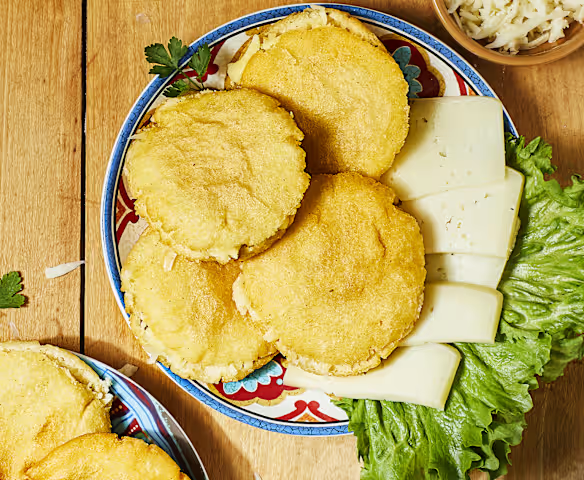
Method 3: Deep-Fried (Colombian “Arepas de Choclo”)
- Shape thinner (0.5cm).
- Fry at 180°C (350°F) until golden and puffed.
- Drain on rack, salt immediately.
Method 4: Grilled (Asado Style)
- Brush with oil.
- Grill over medium charcoal until charred and heated through.
4. The Splitting Technique:
- Wait 2–3 minutes after cooking—steam settles.
- Use serrated knife in sawing motion around equator.
- Leave hinge on one side for easier stuffing.
- Optional: Scoop out some interior for more filling space (Venezuelan style).
🗺️ Regional Variations: The Arepa Atlas
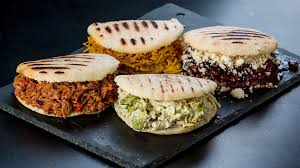
VENEZUELAN STYLE (Thick, Stuffed, Fork-and-Knife):
Reina Pepiada (The Queen):
- Filling: Shredded chicken + avocado + mayonnaise
- History: Named for 1955 Miss World Susana Duijm
- Texture: Creamy, rich, slightly chunky
Pabellón (The Flag):
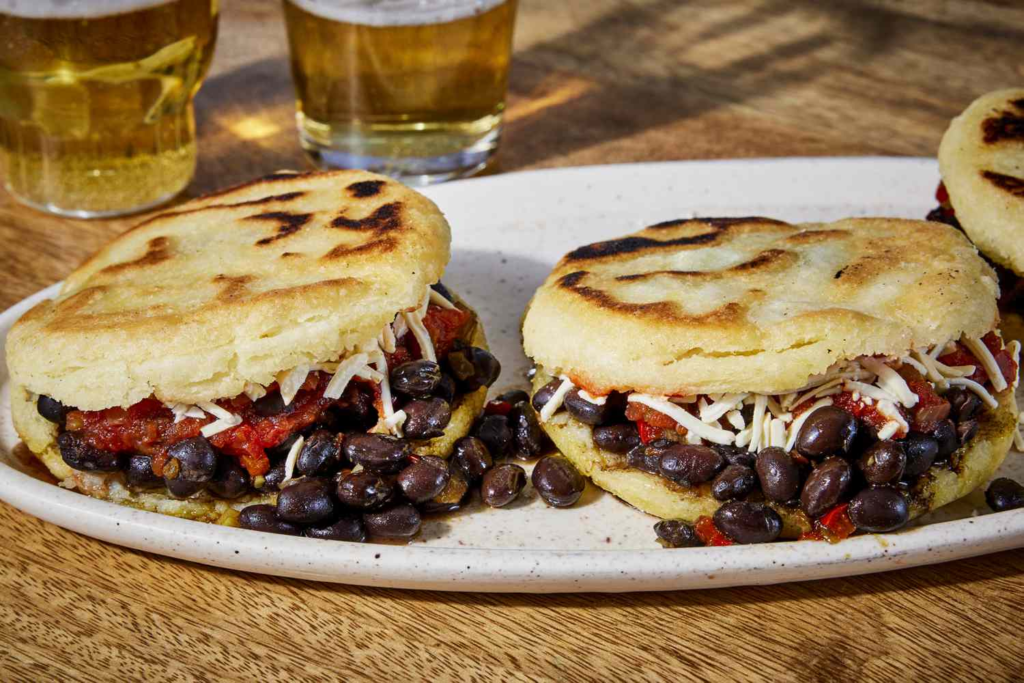
- Filling: Shredded beef + black beans + fried plantains + cheese
- Presentation: Represents Venezuelan flag colors
- Key: Each component kept distinct
Domino (The Classic):
- Filling: Black beans + crumbled white cheese
- Name: Resembles domino pieces
- Simple perfection
Perico (Breakfast King):
- Filling: Scrambled eggs with tomatoes and onions
- Timing: Always breakfast or brunch
- Served: With café con leche
COLOMBIAN STYLE (Thinner, Topped, Handheld):
Arepa de Huevo (The Legend):
- Method: Fried, slit, raw egg inserted, re-fried
- Origin: Caribbean coast specialty
- Warning: Molten yolk potential
Arepa de Choclo (Sweet Corn):
- Dough: Fresh sweet corn + corn flour
- Texture: Slightly sweet, moist, often with cheese
- Served: With butter and fresh cheese
Arepa Boyacense (Regional Star):
- Filling: Cheese inside dough before cooking
- Origin: Boyacá department
- Texture: Stretchy cheese pull when broken
Arepa de Queso (Cheese Lover’s):
- Cheese: Mixed into dough and melted inside
- Best: Eaten plain with butter
🧀 The Filling Pantheon: Endless Possibilities
Protein Palace:
- Carne Mechada: Slow-cooked shredded beef with peppers
- Pollo Guisado: Stewed chicken with sofrito
- Pernil: Citrus-marinated roast pork
- Cazón: Shredded shark (coastal specialty)
- Huevos: Scrambled, fried, or revueltos
Vegetarian Wonders:
- Caraotas Negras: Seasoned black beans
- Guacamole: Avocado mash with lime and cilantro
- Queso de Mano: Hand-pulled fresh cheese
- Champiñones: Sautéed mushrooms with garlic
Sauces & Condiments:
- Guasacaca: Venezuelan avocado-herb sauce
- Ají Picante: Colombian vinegary hot sauce
- Salsa Rosada: Ketchup-mayo blend
- Natilla: Colombian sour cream
⚠️ The Non-Negotiable Rules
1. Flour Doctrine:
- ONLY harina PAN/masarepa—pre-cooked corn flour
- Never substitute with masa harina or polenta
- Store airtight—corn flour absorbs moisture
2. Dough Commandments:
- Warm water—cold doesn’t hydrate properly
- Rest dough—minimum 5 minutes, no skipping
- Consistent thickness—cooks evenly
- No over-kneading—develops tough arepas
3. Cooking Physics:
- Medium-low heat—outside burns before inside cooks
- Don’t press while cooking—squeezes out moisture
- Flip once only—better crust development
- Hollow sound test—doneness indicator
4. The Forbidden List:
- No baking powder (not bread)
- No yeast (not meant to rise dramatically)
- No raw cornmeal (won’t cook through)
- No microwaving to finish (becomes rubbery)
🧪 The Science of the Arepa
Why Pre-Cooked Flour Works:
- Gelatinized Starch: Flour is pre-cooked, starch granules already burst
- Instant Hydration: Absorbs water quickly, forms cohesive dough
- Short Cooking Time: Only needs heating through, not cooking from raw
Texture Development:
- Crust Formation: Maillard reaction at 140–165°C
- Interior Steam: Water in dough turns to steam, creates tender crumb
- Corn Flour Nature: Naturally gluten-free, doesn’t develop elasticity
Common Failure Points:
- Cracked edges: Dough too dry, didn’t rest enough
- Gummy interior: Undercooked, heat too high
- Burnt outside: Heat too high, uneven pan
- Flat arepas: Dough too wet, pressed too thin
☕ Perfect Pairings: The Daily Rhythm
Venezuelan Day:
- Breakfast: Perico arepa + café con leche
- Lunch: Pabellón arepa + papelón con limón (sugarcane drink)
- Dinner: Simple cheese arepa + soup
- Snack: Reina pepiada at street stall
Colombian Day:
- Breakfast: Arepa de huevo + hot chocolate
- Mid-morning: Arepa de choclo with cheese
- Lunch: Grilled arepa with steak toppings
- Afternoon: Arepa de queso with coffee
Beverage Partners:
- Coffee: Tinto (black) or café con leche
- Juices: Passionfruit, guava, or tamarind
- Beer: Polar (Venezuela) or Aguila (Colombia)
- Soft drinks: Malta or Colombiana
📜 The Cultural Experience
Arepas are cultural touchstones:
- Venezuela’s economic symbol: Affordability during hardship
- Colombia’s regional pride: Each department has its specialty
- Immigrant comfort: Venezuelan diaspora’s taste of home
- Family ritual: Weekend arepa-making with multiple generations
The sound of arepas cooking—the gentle sizzle, the hollow tap—is the soundtrack of homes from Caracas to Cartagena. Street vendors’ calls of “¡Arepas calientes!” mark neighborhood rhythms.
Final Arepa Wisdom: “Una arepa sin amor es solo masa” — “An arepa without love is just dough.” The care in shaping, the patience in cooking, the generosity in stuffing—that’s where the magic lives.
Serve warm, stuff generously, and share abundantly. ¡Buen provecho! 🇻🇪🇨🇴✨
The Global Comfort Journey Continues
From the vibrant streets of Mumbai to the silent concentration of Bilbao, from Thailand’s fiery markets to Sweden’s cozy fika, from France’s coastal pots to Latin America’s griddles—these dishes form a testament to humanity’s shared culinary genius.
Arepas teach us: How humble ingredients become cultural icons through daily devotion.
May your kitchen forever be filled with the scents of distant places and the warmth of shared meals. The world’s comfort is in your hands—one golden, stuffed circle at a time.
Happy cooking, and may your arepas always be perfectly hollow when tapped! 🌍👨🍳🌽
Leave a Reply