
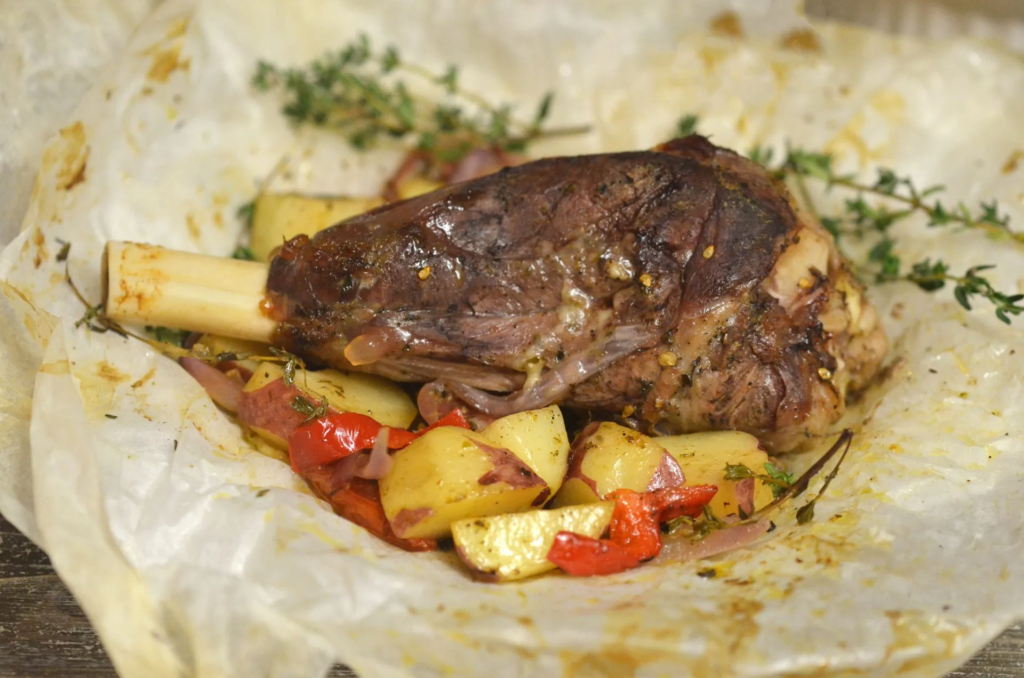
Taste of Heaven – Kleftiko is Greece’s slow-cooked confession—a dish born from bandits, perfected by grandmothers, and shared by everyone. This lamb, wrapped like treasure and stolen from the clock, emerges from its parchment tomb impossibly tender, perfumed with lemon and oregano, telling stories of mountains, rebellion, and Sunday tables.
⛰️ A Dish Born in Hiding, Served in Celebration
Legend says 19th-century Greek kleftes (bandits/rebels) would steal sheep, then cook them in sealed underground pits to hide the smoke from Ottoman authorities. The meat cooked in its own juices for hours, becoming so tender it could be eaten with no knives—a silent meal for silent men. Today, that secret rebellion has become Greece’s most celebratory slow food.
🛒 Ingredients: The Mountain Pantheon
The Lamb (The Hero):
- 1.8–2.2 kg bone-in lamb shoulder (preferred) or leg
- Shoulder: More fat, more connective tissue, more flavor
- Leg: Leaner, still excellent if from young lamb
- Quality: Greek mountain lamb if possible, aged slightly
- 6–8 garlic cloves, sliced into thin slivers
- Not minced: Slivers embed in meat, create pockets of flavor
The Marinade (The Greek Sun in a Bowl):
- Juice of 2 large, ripe lemons (Meyer if available)
- Zest of 1 lemon (yellow only, no bitter pith)
- 120 ml extra-virgin Greek olive oil (Kalamata or Crete)
- Never substitute with lighter oils
- 2 tbsp dried Greek oregano (rigani—mountain oregano)
- Critical: Greek oregano has different flavor profile
- 1 tbsp fresh rosemary, finely chopped (optional but traditional in some regions)
- 2 tsp coarse sea salt (Greek sea salt if available)
- 1 tsp freshly cracked black pepper
- Optional: 1 tsp dried mint (Cretan addition)
The Vegetable Bed:
- 4–5 medium waxy potatoes (Yukon Gold or similar), cut into large chunks
- Not Russet: They become mushy
- 2 red onions, quartered with root intact (holds shape)
- Optional: 2 carrots, 2 celery stalks, 1 fennel bulb (regional variations)
The Cooking Liquid:
- 200 ml dry white wine (Assyrtiko or Retsina-style)
- Alternative: Chicken stock or water
- 4–5 fresh bay leaves (dried if fresh unavailable)
- 1 cinnamon stick (optional, some island variations)
The Wrapping:
- Parchment paper (baking paper), large roll
- Heavy-duty aluminum foil
- Butcher’s twine (optional, for securing)
For Serving:
- Crusty village bread (horiatiko psomi)
- Extra lemon wedges
- Greek yogurt or tzatziki
- Kalamata olives
- Feta cheese with oregano and oil
⏳ The 24-Hour Ritual: Step-by-Step Mastery
DAY 1: THE MARINATION (The Waiting Game)
1. The Lamb Preparation:
- Pat lamb dry thoroughly—moisture prevents browning.
- Make deep incisions all over with paring knife:
- Angle: 45-degree angle, 3–4cm deep
- Spacing: Every 5cm across surface
- Purpose: Creates flavor channels, tenderizes
- Insert garlic slivers into each incision—press deep.
2. The Marinade Alchemy:
- In bowl, whisk lemon juice, zest, olive oil, oregano, salt, pepper.
- Emulsify properly: Oil and lemon should combine.
- Optional: Add rosemary, mint, or 1 tsp paprika for color.
- Massage marinade into lamb, covering every surface.
- Don’t be gentle: Really work it into incisions.
- Place in non-reactive dish, cover tightly.
- Refrigerate 12–24 hours (minimum 4, but overnight transforms).
- Turn every few hours if possible.
DAY 2: THE SLOW THEFT FROM TIME
3. The Vegetable Foundation:
- Preheat oven to 160°C (320°F) conventional (150°C/300°F fan).
- Not higher: The magic is in slow heat.
- Toss potatoes and onions with:
- 2 tbsp olive oil
- Salt, pepper, pinch of oregano
- Optional: Add other vegetables at this stage.
4. The Ancient Wrapping Technique:
The Parchment-Foil Sandwich:
- Tear 1m length parchment paper.
- Layer 1m foil on top (foil stronger, parchment prevents reaction).
- Center lamb on paper/foil.
- Surround with vegetables.
- Pour marinade and wine over everything.
- Add bay leaves, cinnamon if using.
The Parcel Fold (The Secret):
- Bring long sides together above lamb.
- Fold down in 2cm increments, creating tight seal.
- Crimp ends like candy wrapper, folding inward.
- Wrap entire parcel in second layer of foil (insurance).
- Optional: Tie with twine for perfect package.
5. The Oven Journey:
- Place parcel in roasting pan (catches any leaks).
- Bake center rack for 4–5 hours:
- 2–2.5kg: 4 hours
- Over 2.5kg: 5 hours
- NO PEEKING: Every opening loses precious steam.
- Test doneness: Should feel incredibly tender through foil.
- Optional: Last 30 minutes, increase to 180°C (355°F) to brown vegetables more (some pierce top of parcel).
6. The Resting (Non-Negotiable):
- Remove from oven, let rest 30 minutes:
- 20 minutes sealed
- 10 minutes partially opened
- Meat continues cooking, juices redistribute.
7. The Grand Revelation:
- Carry parcel to table—theater is part of experience.
- Slice open with scissors or knife.
- Aroma explosion: Lemon, oregano, lamb steam.
- Transfer to platter, spoon juices over.
🍽️ The Taverna Presentation
The Family-Style Platter:
- Lamb: Pulled from bone in large chunks
- Vegetables: Arranged around meat
- Juices: Poured into small pitcher
- Garnishes: Lemon wedges, fresh oregano sprigs
- Bread: For mopping (essential)
- Yogurt: On side for cooling contrast
How to Eat Like a Greek:
- First: Taste lamb alone
- Second: Lamb with potato and juice
- Third: Lamb on bread with yogurt
- Always: Use hands for bones
🎯 The Hallmarks of Perfect Kleftiko
Visual Perfection:
- Lamb: Falling from bone with gentle tug
- Surface: Golden where exposed, not browned
- Garlic: Visible, softened, not burned
- Juices: Ample, slightly thickened, not watery
Texture Symphony:
- Lamb: Meltingly tender, not mushy
- Potatoes: Creamy inside, slight crust
- Onions: Softened but holding shape
- Garlic: Spreadable, not crunchy
Flavor Balance (The Mountain Quartet):
- Rich: Lamb fat rendered to silk
- Bright: Lemon cutting through richness
- Herbal: Oregano’s mountain perfume
- Savory: Garlic and meat juices
- Earth: Vegetables steamed in essence
🏝️ Regional Variations: Greece’s Kleftiko Map
1. Cretan Kleftiko (Most Famous):
- More herbs: Wild thyme, sage, extra oregano
- Often includes: Myzithra cheese in parcel
- Served with: Dakos (barley rusk salad)
2. Cycladic Island Style:
- Tomatoes added to parcel
- Capers or olives sometimes included
- Served with: Grilled octopus first course
3. Mainland/Mountain Style:
- More garlic, sometimes whole bulbs
- Red wine instead of white
- Root vegetables: Carrots, parsnips, celery
4. Modern Taverna Style:
- Individual parcels for each serving
- Pulled lamb served in bowl with juices
- Deconstructed with separate components
⚠️ The Non-Negotiable Rules
1. Time Doctrine:
- Marinate overnight—flavor penetration is everything
- Slow oven—cannot rush tenderness
- Rest adequately—juices need to settle
- No shortcuts—this dish respects time
2. Wrapping Commandments:
- Double layer—foil strength, parchment non-reaction
- Tight seal—steam is the cooking medium
- No holes—precious juice escape
- Pan underneath—insurance against leaks
3. Lamb Wisdom:
- Bone-in always—bone adds flavor, regulates heat
- Shoulder preferred—fat and connective tissue magic
- Not trimmed—fat renders into sauce
- Room temperature before wrapping (30 minutes out of fridge)
4. The Forbidden List:
- No high heat (toughens meat before tenderizing)
- No frequent checking (releases steam)
- No skipping marinade (flavor foundation)
- No serving immediately (needs rest)
🧪 The Science of the Steam Tomb
Why It Works:
- Collagen Breakdown: Connective tissue converts to gelatin at 70–80°C (158–176°F) over hours
- Steam Cooking: Moist heat prevents drying, gently cooks
- Flavor Capture: Aromatics cannot escape, infuse everything
- Even Heat: Parcel creates uniform temperature environment
Common Failure Points:
- Dry meat: Leaky parcel, over-lean cut, overcooked
- Tough meat: Under-cooked, wrong cut (loin), temperature too high
- Bland flavor: Insufficient marination, poor quality lamb
- Soggy vegetables: Cut too small, parcel too wet
🍷 Perfect Pairings: The Greek Way
Wines:
- Red: Agiorgitiko (Nemea) or Xinomavro (Naoussa)
- White: Assyrtiko (Santorini) for contrast
- Rosé: Cretan rosé with herbal notes
- Never: Heavy, oaky wines that overpower
The Complete Greek Meal:
- Mezedes: Tzatziki, dolmades, saganaki
- Salad: Horiatiki (village salad)
- Main: Kleftiko with all accompaniments
- Dessert: Baklava or yogurt with honey
- Digestif: Ouzo or raki with meze
Sunday Family Context:
- Served 3pm after church
- Multiple generations at table
- Loud conversation, sharing of food
- Napping encouraged afterward
📜 The Cultural Experience
Kleftiko is Greek hospitality embodied:
- Sunday ritual across households
- Taverna specialty for tourists and locals
- Festival food at paniyiria (saint day celebrations)
- Winter comfort in mountain villages
The ceremony of opening the parcel—the shared anticipation, the steam release, the collective “ahhh”—is as important as the eating. This is food that demands gathering, that feeds a crowd, that creates memory.
Final Greek Wisdom: “Κλέφτικο wants three things: time, respect, and hungry people. Rush it and it rebels. Serve it cold and it cries. Eat it alone and it loses its soul.”
Serve with generosity, eat with community, and taste the mountains and rebellion in every tender bite. Καλή όρεξη! (Kalí órexi!) 🇬🇷✨
The World’s Hearth Continues Burning
From Portugal’s blistering tarts to Greece’s steam-sealed lamb, from South Africa’s golden bakes to Sweden’s cardamom-scented fika—these dishes form a global chorus of slow food, patience, and shared tables.
Kleftiko teaches us: How time and secrecy transform the simple into the sacred.
May your oven always hold parcels of promise, your marinades work their overnight magic, and your table be filled with those who appreciate food stolen from time.
Happy cooking, and may your parcels always hold their secrets until the perfect moment! 🌍👨🍳🔥
The world’s slow wisdom is in your kitchen. Cook with patience, serve with joy.
Leave a Reply