
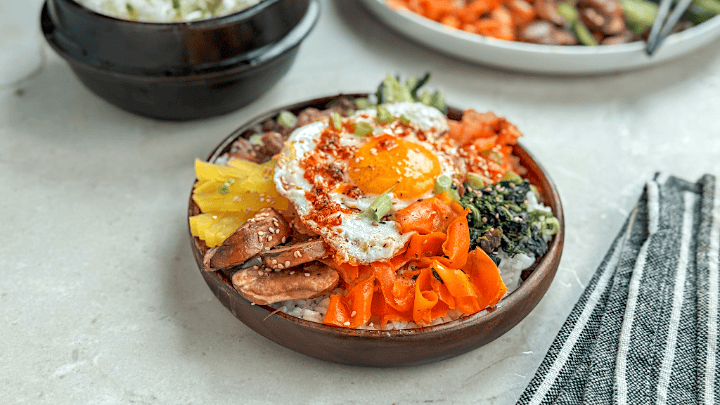
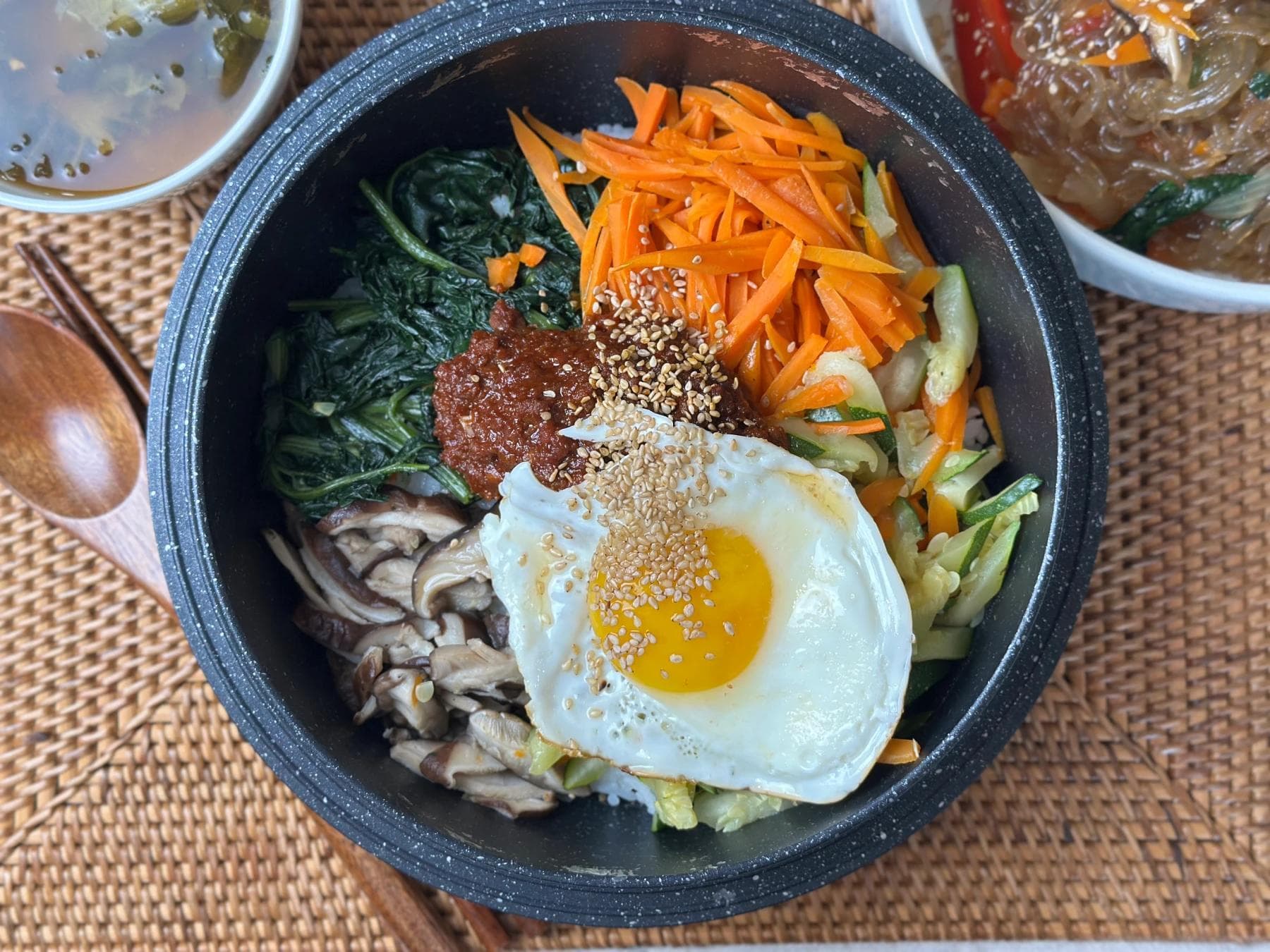
Bibimbap (“mixed rice”) is one of Korea’s most beloved dishes, a colorful rice bowl topped with seasoned vegetables (namul), marinated beef, fried egg, and gochujang sauce. Everything is mixed together for a perfect harmony of textures, temperatures, and flavors—crisp, soft, spicy, savory. Originating from royal court cuisine and ancestral rituals, it’s a balanced meal representing Korean emphasis on seasonal produce.
Dolsot bibimbap (hot stone bowl) adds crispy rice crust at the bottom.
Detailed History and Cultural Significance
Roots trace to Joseon dynasty (1392-1897) as “goldongban.” It’s eaten year-round but especially comforting in winter. UNESCO intangible heritage in Korean food culture; every region has its twist.
Ingredients (serves 4):
- 400g short-grain rice
- 300g beef bulgogi (thinly sliced, marinated)
- Namul: spinach, carrot, zucchini, bean sprouts, mushrooms (each seasoned separately)
- 4 eggs
- Gochujang sauce, sesame oil, garlic, soy, sugar
- Sesame seeds, nori
Prepare namul individually for distinct flavors.
Step-by-Step Instructions:
- Cook rice; keep warm.
- Stir-fry each vegetable separately with garlic, sesame oil, salt.
- Marinate and cook beef bulgogi.
- Fry eggs sunny-side up.
- Assemble: Rice base, arrange namul and beef in sections.
- Top with egg; add gochujang.
- Mix thoroughly before eating.
The mixing is ritualistic.
Tips for Authenticity and Perfection:
- Use gochujang from Korea for true heat.
- Blanch vegetables briefly to keep color.
- Hot stone bowl for socarrat-like crust.
- Adjust gochujang for spice preference.
- Add kimchi for extra tang.
Variations:
- Vegetarian: Tofu or mushrooms.
- Seafood: Shrimp or squid.
- Stone bowl vs. regular.
- Quick versions with pre-made namul.
Nutritional Insights: Per bowl: ~600 calories, balanced macros. Veggies provide fiber; egg adds protein.
Pairings: With kimchi, Korean tea, or soju.
Bibimbap is a rainbow of Korean flavors—fresh and satisfying!


Leave a Reply