
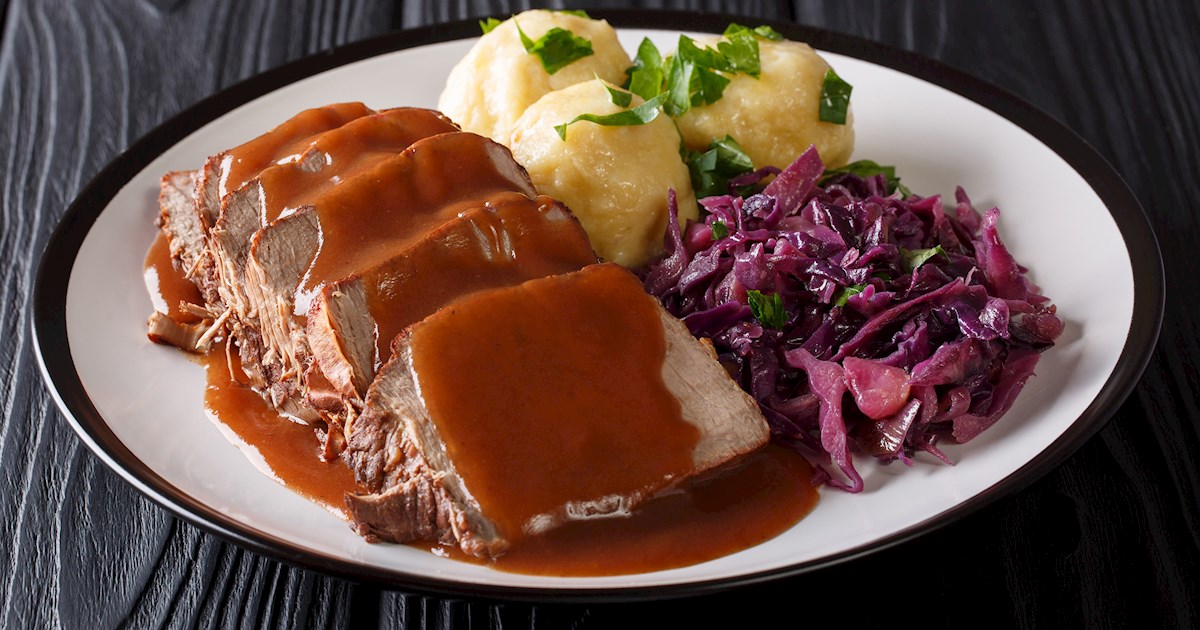
Sauerbraten, translating to “sour roast,” is one of Germany’s most cherished dishes, particularly in the Rhineland region. This tender, tangy beef roast is marinated for days in a vinegar-based mixture with spices, then slow-cooked to perfection. The result is melt-in-your-mouth meat with a distinctive sweet-sour gravy, often served with red cabbage and potato dumplings. Its origins trace back to the Middle Ages, when marinating was a preservation method, evolving into a festive meal for holidays like Christmas or family gatherings.
The dish showcases German culinary traditions with rich, comforting flavors influenced by Roman vinegar and local spices. Today, it is a cherished symbol of home cooking, featuring regional variations like Rheinischer Sauerbraten, which originally used horse meat but now commonly uses beef.
Detailed History and Cultural Significance
Dating back to at least the 13th century, sauerbraten is referenced in medieval cookbooks. It became especially popular in the 19th century as a traditional Sunday roast. The marinade tenderizes tougher cuts of meat, showcasing the ingenuity of resourceful peasant cooking. In Germany, sauerbraten is commonly enjoyed alongside beer or wine and is celebrated at local festivals. For immigrants, it serves as a cherished symbol of heritage, prominently featured in German-American communities.
Ingredients (serves 6-8):
- Meat: 2kg beef rump or eye of round
- Marinade: 500ml red wine vinegar, 500ml water, 2 onions (sliced), 2 carrots (sliced), 1 celery stalk, 10 juniper berries, 5 allspice berries, 3 cloves, 2 bay leaves, 1 tsp mustard seeds, salt, pepper
- For Cooking: 2 tbsp oil, 2 tbsp flour, 100g gingerbread or raisins for sweetness, 200ml beef stock
- Sides: Potato dumplings (Kartoffelklöße), red cabbage (Rotkohl)
Use high-quality vinegar for balanced acidity.
Step-by-Step Instructions:
- Prepare marinade: Boil vinegar, water, vegetables, and spices; cool.
- Submerge beef in marinade; refrigerate 3-5 days, turning daily.
- Remove beef, pat dry; strain marinade, reserve liquid and veggies.
- Heat oil in Dutch oven; brown beef all sides.
- Add reserved veggies; cook until soft.
- Sprinkle flour; stir to make roux.
- Add reserved marinade and stock; simmer covered 2-3 hours until tender.
- Remove beef; blend sauce, add gingerbread for thickness and sweetness.
- Slice beef; serve with sauce.
This process ensures deep flavor penetration.
Tips for Authenticity and Perfection:
- Marinate longer for tenderness (up to 10 days).
- Use enamel or glass container to avoid reaction with vinegar.
- Adjust sweetness with honey if gingerbread unavailable.
- Rest meat before slicing to retain juices.
- For gluten-free, substitute flour with cornstarch.
Variations:
- Swabian: With spaetzle noodles.
- Franconian: Adds bacon.
- Vegetarian: Use seitan or portobello mushrooms.
- Modern: Instant Pot version cuts time.
Nutritional Insights: Per serving: ~450 calories, high protein (40g), iron-rich from beef. Vinegar aids digestion; watch sodium.
Pairings: Serve with German Riesling or dark beer, apple strudel for dessert.
Sauerbraten embodies German warmth—try it for a taste of tradition!
:max_bytes(150000):strip_icc()/221361-traditional-sauerbraten-beauty-4x3-BP-2925-a1b153f8bdfd4e4b840d5c802d3e16a3.jpg)
:max_bytes(150000):strip_icc()/221361-traditional-sauerbraten-step-6-BP-2878-3f35b6de4cf34f5091fb69b15d9720ca.jpg)
Leave a Reply